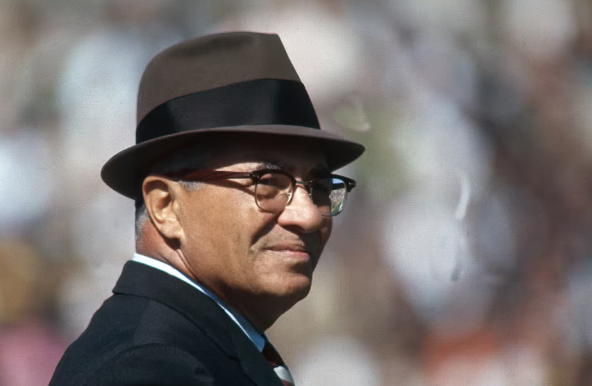
Beyond the Touchdown: Unpacking Vince Lombardi’s LGBTQ+ Legacy in the NFL
In the annals of American sports, few names resonate with the power and reverence of Vince Lombardi. Synonymous with unparalleled success, unwavering discipline, and a relentless pursuit of excellence, Lombardi built an empire with the Green Bay Packers and left an indelible mark on the NFL. Yet, recent revelations, brought to light by NFL Network, are prompting a deeper look at the legendary coach – not just for his Super Bowl victories, but for an often-overlooked, profoundly human aspect of his tenure: his quiet yet powerful connection to the acceptance of gay players. The news that Lombardi coached at least three gay NFL players during his time in Washington, fostering an environment of professionalism and respect, unveils a remarkable chapter in the history of sports and queer visibility. This isn’t just a sports story; it’s a pivotal narrative that illuminates a surprising facet of Lombardi’s LGBTQ+ Legacy, challenging preconceived notions of a bygone era and offering a beacon of historical allyship.
The Man, The Legend, The Unexpected Ally
Vince Lombardi was a towering figure, both literally and figuratively, in a sport defined by brute strength and traditional masculinity. Born into a devout Catholic Italian-American family, his image was that of a stoic, no-nonsense leader. His famous quotes, like “Winning isn’t everything, it’s the only thing,” are etched into the very fabric of competitive culture. Given the social climate of the 1960s – an era when homosexuality was not only stigmatized but often criminalized, and certainly unthinkable in the hyper-masculine world of professional sports – Lombardi’s reported actions feel profoundly ahead of their time. This isn’t about public declarations or protest marches; it’s about a pragmatic, results-oriented coach who seemingly prioritized a player’s talent and character over their sexual orientation, creating a space where individuals could thrive professionally without fear of prejudice from their leader.
His approach hints at a broader philosophy of leadership that valued the individual and their contribution to the team above all else. For Lombardi, it appears, the only color that mattered was the team’s jersey, and the only orientation was towards victory. This isn’t to say he was an activist in the modern sense, but his actions, however private, speak volumes about an underlying humanity and an understanding that talent knows no boundaries.
A Different Era, A Progressive Stance
To truly grasp the significance of Lombardi’s alleged stance, one must transport themselves back to the 1960s. The LGBTQ+ rights movement as we know it today was in its nascent stages. Stonewall was yet to happen. Openly gay individuals in positions of public visibility, let alone in the testosterone-fueled arena of professional football, were virtually unheard of. Athletes lived in fear of exposure, which could mean the end of their careers, social ostracization, and personal ruin. The pressure to conform, to hide one’s true identity, was immense.
Against this backdrop, Lombardi’s leadership at the Washington Redskins (now Commanders) takes on a different hue. Reports suggest that he was aware of gay players on his roster and, crucially, that he fostered an environment where their professional lives were unaffected. This wasn’t tolerance born of indifference; it appears to be a conscious decision to protect his players and ensure they felt respected and valued members of the team. This kind of protection, however subtle, would have been a lifeline for individuals navigating a deeply hostile world. It provided a sanctuary within the high-pressure confines of professional sports, allowing players to focus on their game rather than on the constant threat of discovery.
The Washington Years: Unpacking the Details
Lombardi’s tenure with the Washington Redskins was brief, lasting only the 1969 season before his untimely death in 1970. Yet, in that single season, he managed to turn a struggling team into a winning one, achieving a 7-5-2 record. More importantly, it was during this period that his progressive approach to his players’ personal lives came to light. While the specific names of the players are not always front and center in the public narrative (and rightly so, as their privacy should be respected), the mere fact that NFL Network is exploring this connection validates the whispers and anecdotal evidence that have circulated for years.
The stories often highlight Lombardi’s insistence on fairness and his no-nonsense approach to any form of discrimination. There are accounts of him directly confronting players who expressed homophobic sentiments or made disparaging remarks, making it clear that such behavior would not be tolerated on his team. He understood that a united team, free from internal prejudice, was a stronger team. His actions served as a powerful, albeit quiet, directive to his staff and players: focus on performance, respect your teammates, and leave personal prejudices at the door. This pragmatic acceptance, while not overtly political, paved the way for a more inclusive environment than was typical for the era.
Beyond the Gridiron: Lombardi’s Impact on Sports and Society
Lombardi’s LGBTQ+ Legacy extends far beyond the locker room. His example, however understated, contributes to a larger narrative of how powerful figures can, through their actions, influence societal change. It demonstrates that empathy and respect are not antithetical to strength or success, but rather integral components of true leadership. For decades, sports have been seen as a bastion of traditional masculinity, often resistant to conversations about diversity and inclusion, especially concerning sexual orientation and gender identity.
This story provides a crucial historical counter-narrative, showing that even in the most seemingly conservative environments, seeds of acceptance were being sown. It encourages us to look for hidden histories of allyship and to recognize that progress, however incremental, has always been part of our collective journey. It also reminds us that the fight for equality is long and multifaceted, and that moments of individual courage, like Lombardi’s, contribute to the larger mosaic of the movement. Just as communities come together to celebrate and uplift, like at events promoting solidarity and acceptance, individual acts of leadership can quietly shift culture. For those interested in the broader impact of collective action and cultural shifts, exploring initiatives like the Trans-Mission Wembley Concert 2026 provides a powerful contemporary example of how music and community can drive visibility and support for the trans community.
The Modern Game and Digital Spaces: How Far Have We Come?
Fast forward to today, and the landscape of professional sports and LGBTQ+ visibility is vastly different. While still far from perfect, we now have openly gay and trans athletes in various leagues, serving as role models and shattering stereotypes. The conversation around mental health, identity, and inclusion is more open, though still challenging. Teams and leagues often have Pride initiatives, and allies are more vocal.
However, the journey isn’t over. Homophobia and transphobia still persist, and athletes still face immense pressure. The mental toll of hiding one’s identity, a burden many of Lombardi’s players likely carried, is now better understood. In a world where connection is increasingly digital, many LGBTQ+ individuals find community and support online. This shift has created new opportunities for belonging, but also new challenges around safety and privacy. Just as Lombardi provided a safe space in the locker room, secure online environments are crucial today. For those navigating the digital landscape, ensuring privacy and security is paramount. Resources like a comprehensive guide to secure gay chat are invaluable for fostering safe and authentic connections in online communities, reflecting the ongoing need for protective measures in both physical and virtual spaces.
Continuing the Conversation: What Lombardi’s Story Means Today
The re-examination of Vince Lombardi’s legacy through the lens of LGBTQ+ acceptance is more than just a historical footnote; it’s a vital reminder of several enduring truths:
- Leadership Transcends Prejudice: True leaders, regardless of the era, recognize and value talent and character above all else, fostering environments where everyone can succeed.
- The Power of Quiet Allyship: Not every act of allyship needs to be a grand gesture. Sometimes, simply creating a safe and respectful professional space is the most revolutionary act of all.
- Hidden Histories Matter: Unearthing stories like Lombardi’s enriches our understanding of the past and provides crucial context for the ongoing fight for equality. It shows that LGBTQ+ individuals have always been present, even when hidden, and that allies have existed in unexpected places.
- The Continuum of Progress: While we celebrate how far we’ve come, Lombardi’s story reminds us that the journey towards full equality is a continuous effort, built on the foundations laid by those who, in their own way, challenged the norms of their time.
- Relevance to Online Culture: The need for safe, respectful spaces, whether a 1960s locker room or a modern online chat platform, remains constant. The methods change, but the core human need for acceptance and belonging endures.
As we reflect on Vince Lombardi’s contributions, it’s clear his legacy is not just about Super Bowl trophies and iconic speeches. It’s about a leadership philosophy that, perhaps unintentionally, embraced a form of inclusion that was decades ahead of its time. His quiet acceptance of gay players in an era of profound prejudice offers a powerful testament to the impact one individual can have, inspiring us to continue striving for a world where every person, regardless of who they love, can bring their full, authentic self to every arena of life.