The recent news of Steven Waring, a heterosexual man who claims he was forced out of the British Army at 16 after being falsely accused of being gay, is a stark, poignant reminder of a dark chapter in history. His story, decades in the making, brings to light the pervasive and destructive nature of the Military Gay Ban that once gripped armed forces globally, including the UK. This isn’t just a historical anecdote; it’s a living testament to how baseless accusations, rooted in deep-seated prejudice, could shatter lives, regardless of one’s actual identity. Waring’s experience, detailed as a chilling confrontation where his Commanding Officer allegedly asked, “Why are you a poof?”, echoes the trauma faced by countless individuals, both gay and straight, who found themselves caught in the crosshairs of institutionalized homophobia.
A Weaponized Accusation: Steven Waring’s Ordeal
Steven Waring’s account is particularly jarring because he identifies as heterosexual. This detail doesn’t diminish the suffering of those who were genuinely gay and expelled; rather, it amplifies the insidious nature of the policies in place. The accusation itself, regardless of its truth, became a weapon. For a 16-year-old, just embarking on what was likely a dream career, to be subjected to such a humiliating and career-ending interrogation is unfathomable. The immediate assumption of guilt, the use of a derogatory slur, and the subsequent forced departure paint a vivid picture of a hostile environment where due process and individual rights were sidelined in favor of prejudice.
This incident, happening when Waring was just a teenager, highlights the vulnerability of young recruits and the immense power wielded by commanding officers. It underscores how deeply ingrained homophobic attitudes were within the military structure, creating a culture where a mere accusation could lead to irreversible damage to a young person’s future, reputation, and mental well-being. Waring’s story, emerging decades later, is not just a personal grievance; it’s a historical artifact that speaks volumes about the systemic discrimination that once plagued British institutions.
The Era of Exclusion: A Global Pattern of Prejudice
Waring’s experience is not isolated. For decades, LGBTQ+ individuals were systematically banned from serving in the armed forces across many countries, including the United Kingdom and the United States. In the UK, the ban on gay and lesbian personnel serving openly was only lifted in January 2000. Prior to this, homosexual acts, even if consensual and private, were often treated as ‘gross indecency’ and could lead to severe penalties, including imprisonment, dishonorable discharge, and public humiliation.
The UK’s Discriminatory Past
The British military’s official policy mandated the discharge of any service member found to be homosexual. This wasn’t merely about ‘not asking, not telling’—it was an active witch hunt. Investigations, often invasive and humiliating, were conducted based on rumors, anonymous tips, or sometimes, as in Waring’s case, a seemingly arbitrary accusation. The reasoning behind these bans was often couched in terms of ‘unit cohesion,’ ‘morale,’ or ‘security risks,’ all thinly veiled justifications for homophobia.
- Psychological Toll: Service members lived in constant fear of exposure, leading to immense stress, anxiety, and depression.
- Career Destruction: Lives built around military service were suddenly dismantled, often with significant financial and social repercussions.
- Lack of Justice: There was little recourse for those accused; the system was designed to expel, not to protect.
The impact extended far beyond the immediate dismissal. Discharged service members often lost pensions, benefits, and their military identity, a core part of their self-worth. They carried the stigma of a dishonorable discharge, making it difficult to find civilian employment and rebuild their lives. The emotional scars, as Waring’s story suggests, could last a lifetime.
Beyond the Uniform: The Human Cost of Intolerance
The narrative of the `Military Gay Ban` is one of profound human cost. It’s a story of unfulfilled potential, broken dreams, and pervasive fear. Imagine dedicating your youth, your energy, your very life to serving your country, only to have it stripped away not for incompetence or disloyalty, but for who you are or who you are *perceived* to be. The irony of Steven Waring’s case – a straight man suffering the consequences of anti-gay prejudice – starkly illustrates that homophobia doesn’t just harm gay people. It creates a toxic environment where fear, suspicion, and accusations can destroy anyone caught in its path.
For LGBTQ+ individuals who actually served during this period, the memories are often deeply painful. Many lived double lives, hiding their true selves from comrades and commanders, constantly vigilant against any slip-up that could reveal their identity. The bonds of camaraderie, often touted as the bedrock of military life, were undermined by the necessity of secrecy. The mental and emotional burden of this sustained deception often led to long-term psychological issues, including PTSD, even after the bans were lifted.
The Lingering Trauma
Even though the UK ban was lifted over two decades ago, the trauma persists. Many older LGBTQ+ veterans still carry the weight of their experiences, distrustful of institutions, and wary of being truly open about their past. Healing is a long and complex process that requires more than just a change in policy; it demands recognition, apology, and active efforts toward restitution.
From Secrecy to Self-Expression: The Digital Age and LGBTQ+ Identity
The world Steven Waring entered the army in, and the one he was forced out of, is vastly different from today’s. The internet, social media, and online chat/dating culture have revolutionized how LGBTQ+ individuals connect, express themselves, and build communities. In an era where being ‘out’ is increasingly normalized, it’s easy to forget the profound secrecy that characterized life for queer people just a few decades ago.
The Impact on Online Chat and Dating
The historical backdrop of fear and forced secrecy heavily influences contemporary LGBTQ+ online interactions. While digital platforms offer unprecedented opportunities for connection and self-expression, they also carry the echoes of past vulnerabilities:
- Seeking Safe Spaces: The emphasis on creating dedicated LGBTQ+ dating apps and forums stems from a historical need for safe spaces where judgment and discrimination are minimized.
- Caution and Verification: The fear of outing, catfishing, or malicious intent, while universal to online dating, can be amplified within the LGBTQ+ community due to past experiences of severe repercussions.
- Authenticity vs. Anonymity: For some, the internet provides a liberating space to be fully authentic, especially for those in less accepting environments. For others, the historical impulse to protect one’s identity leads to a preference for anonymity or careful self-disclosure.
- Community Building: Beyond dating, online platforms have become vital for community building, allowing individuals to find support networks, share experiences, and advocate for rights in ways that were impossible during the `Military Gay Ban` era.
The contrast between Waring’s experience and the relative openness of today’s digital landscape is stark. Where once a whisper could destroy a career, now a profile can connect a person to a global community. Yet, the underlying fear of judgment and the desire for acceptance remain constant, shaped by generations of struggle.
A Call for Empathy and Continued Vigilance
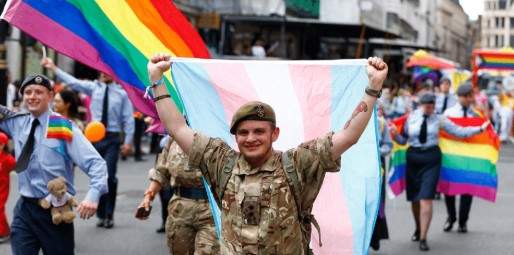
Steven Waring’s story serves as a powerful reminder that history is not so distant. The prejudices that once underpinned policies like the `Military Gay Ban` can resurface in new forms if we are not vigilant. While the UK military has made significant strides in LGBTQ+ inclusion since 2000, establishing support networks and participating in Pride events, the work of addressing historical wrongs and fostering true equity is ongoing.
Acknowledging Past Wrongs
For true healing to occur, there must be a genuine acknowledgment of the harm caused by past policies. This includes:
- Apologies and Reparations: Governments and institutions must issue formal apologies and consider forms of reparation for those whose lives were unjustly impacted.
- Education: Continuing to educate current service members and the public about this history is crucial to prevent similar prejudices from taking root.
- Support for Veterans: Providing dedicated mental health and support services for LGBTQ+ veterans, recognizing the unique trauma they experienced.
Waring’s bravery in coming forward, even after decades, is a testament to the enduring impact of such experiences and the need for justice, even if belated. His case highlights that discrimination doesn’t always hit its intended target to cause harm; the mere existence of a discriminatory framework creates a climate of fear that impacts everyone.
Building a More Inclusive Future
As a community, and as allies, we must draw lessons from stories like Steven Waring’s. It reminds us that fighting for equality isn’t just about protecting the directly targeted; it’s about dismantling systems of prejudice that harm us all. It reinforces the importance of safe spaces, whether physical or digital, where individuals can be their authentic selves without fear of reprisal.
Let us not forget the shadows of the past, but instead, use them to illuminate the path forward. A future where a young recruit’s dreams are not shattered by baseless accusations, and where identity is a source of strength, not vulnerability, is a future worth fighting for. The echoes of “Why are you a poof?” must be transformed into a resounding affirmation of diversity, inclusion, and unwavering respect for every individual, in uniform and out, online and offline.