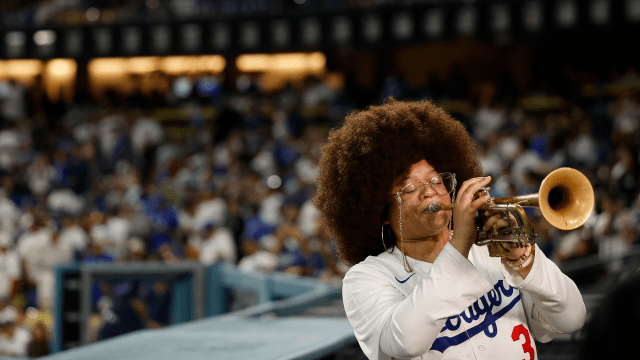
Tatiana Tate and the Dodgers: A Rhapsody for Queer Music Icons in Sports
In the vibrant tapestry of modern culture, where the worlds of sports, music, and identity increasingly intertwine, a refreshing new note has been struck. The Los Angeles Dodgers, a franchise steeped in tradition and legendary moments, recently made a choice that resonates far beyond the baseball diamond, inviting acclaimed trumpeter Tatiana Tate to welcome new closer Edwin Díaz. Tate’s impressive resume boasts collaborations with some of pop’s biggest and most beloved Queer Music Icons, a fact that not only highlights her incredible talent but also underscores a beautiful moment of subtle yet powerful LGBTQ+ visibility in mainstream sports.
This isn’t just about a talented musician playing a fanfare; it’s about the acknowledgment of a rich cultural lineage, the celebration of artistic prowess, and the quiet but firm assertion of inclusivity. As we delve into Tatiana Tate’s journey, her connections to iconic artists, and the broader implications of her presence in Dodger Stadium, we uncover a narrative that speaks volumes about progress, community, and the universal language of music.
A Symphony of Talent and Inclusivity: Tatiana Tate’s Journey
Tatiana Tate is no stranger to grand stages or momentous occasions. Her instrument, the trumpet, has been her passport to a remarkable career, allowing her to stand shoulder-to-shoulder with some of the most dynamic and influential figures in contemporary music. Her journey is a testament to dedication, skill, and an undeniable passion for performance that transcends genres and audiences.
From Pop Stages to the Ballpark Mound: Who is Tatiana Tate?
Before her recent gig at Dodger Stadium, Tatiana Tate had already cemented her reputation as a highly sought-after session and touring musician. Her versatility and distinct sound have made her a favorite among artists who demand nothing but the best. She’s not just a trumpeter; she’s a storyteller, an energizer, and an integral part of the sonic landscape of modern pop. Her ability to infuse emotion and power into her playing has made her an indispensable asset to live performances and studio recordings alike.
Her move to the Dodger Stadium mound, traditionally a space dominated by the roar of the crowd and the crack of the bat, introduces a different kind of spectacle. It’s a convergence of high-stakes athleticism and refined artistry, a pairing that might seem unexpected but perfectly encapsulates the evolving face of entertainment. For a closer like Edwin Díaz, whose entrance is already a celebrated event, Tatiana’s live trumpet adds an unparalleled layer of drama and personalized fanfare. It’s a live, human touch that elevates the experience beyond recorded music, creating an intimate connection between the performer, the athlete, and the fans.
The Power of Collaboration: Playing with Queer Music Icons
What makes Tatiana Tate’s story particularly resonant for the LGBTQ+ community is her history of collaboration with artists widely celebrated as Queer Music Icons. These aren’t just popular musicians; they are figures who, through their art, advocacy, and authentic selves, have become pillars of strength, inspiration, and joy for queer individuals worldwide. Artists like Lizzo, Chaka Khan, and Doechii represent different generations and styles, but they share a common thread: an unyielding commitment to self-love, liberation, and celebrating individuality.
Lizzo: A Grammy-winning phenomenon, Lizzo embodies unapologetic self-love, body positivity, and fierce allyship. Her music, with its anthems of empowerment and joy, has become a soundtrack for queer liberation. Playing alongside Lizzo means being part of a movement that champions authenticity and challenges societal norms, making space for everyone to shine.
Chaka Khan: A living legend, Chaka Khan’s powerhouse vocals and electrifying stage presence have captivated audiences for decades. Her soulful music transcends boundaries, and her unwavering support for the LGBTQ+ community has solidified her status as a beloved icon. To perform with Chaka Khan is to share a stage with a true pioneer whose legacy continues to inspire.
Doechii: A rising star, Doechii brings a fresh, bold energy to the music scene. Her genre-bending sound and fearless artistry resonate with a new generation that values fluidity and self-expression. Her association with Tatiana Tate signals Tate’s relevance and adaptability across diverse musical landscapes, embracing artists who defy categorization.
These collaborations are not merely professional engagements; they are deeply symbolic. They place Tatiana Tate within a lineage of artists who use their platforms to foster inclusivity, amplify marginalized voices, and create spaces where everyone feels seen and celebrated. Her presence at Dodger Stadium, therefore, carries with it the echoes of these powerful alliances, extending their message into a new arena.
Beyond the Trumpet: The Cultural Significance of Queer Music Icons
The term ‘Queer Music Icons’ signifies more than just commercial success; it points to a profound cultural impact. These artists are not only entertainers but also cultural architects, shaping conversations around identity, acceptance, and resistance. Their music often serves as a soundtrack for personal discovery, collective celebration, and shared struggle within the LGBTQ+ community.
More Than Melodies: What Makes an Icon?
What elevates an artist to the status of a queer icon? It’s often a combination of authentic self-expression, fearless advocacy, and the creation of art that deeply resonates with the queer experience. These icons provide solace, inspiration, and a sense of belonging in a world that hasn’t always been welcoming. They use their voices, literally and figuratively, to challenge norms, celebrate differences, and build bridges of understanding. Their concerts become safe havens, their lyrics anthems of resilience, and their personas beacons of hope.
For many queer individuals, these artists are more than performers; they are family, mentors, and symbols of what’s possible. Their influence extends beyond charts and awards, embedding itself in the very fabric of queer identity and community building.
Music as a Beacon of Hope and Solidarity
Music has always been a powerful tool for social change and community cohesion. For the LGBTQ+ community, it has been a crucial element in expressing joy, grief, protest, and solidarity. From disco to pop to rock, queer artists and allies have crafted sounds that define eras and movements. Events like pride parades, protests, and community gatherings are invariably soundtracked by music that speaks to the collective soul of the community.
Tatiana Tate, through her collaborations, implicitly carries forward this legacy. Her instrument, played for a diverse audience at a major sports event, becomes an ambassador for this rich musical heritage and the values it represents. It’s a subtle yet potent reminder that our culture is enriched when all voices are heard and celebrated, and that music remains a universal language capable of uniting disparate worlds.
Bridging Worlds: LGBTQ+ Visibility in Sports and Entertainment
Tatiana Tate’s appearance at Dodger Stadium marks a fascinating intersection of previously distinct cultural spheres: professional sports and queer-aligned pop culture. For a long time, sports were seen as a bastion of traditional masculinity, often resistant to visible LGBTQ+ representation. However, this is rapidly changing, and Tate’s presence is a testament to this evolution.
The Shifting Landscape of Sports: From Exclusion to Embrace
In recent years, professional sports leagues, teams, and athletes have made significant strides towards greater LGBTQ+ inclusivity. From Pride Nights at ballparks to athletes coming out and advocating for queer rights, the landscape is evolving. This shift reflects broader societal changes and a growing understanding that diversity enriches every aspect of life, including competitive sports. Teams are recognizing the importance of creating environments where everyone feels safe, respected, and represented.
Tatiana Tate’s role, while not directly about an athlete’s identity, subtly but effectively signals this growing acceptance. Her association with Queer Music Icons, widely known and celebrated within the LGBTQ+ community, implicitly brings that spirit of inclusivity to a major league ballpark. It suggests that the Dodgers, by embracing her talent, are also embracing the diverse cultural tapestry she represents.
Dodger Stadium’s Nod to Diversity
The Dodgers’ decision to hire Tatiana Tate to play for Edwin Díaz’s entrance is more than just a creative choice for a walk-up song; it’s a cultural statement. It demonstrates an appreciation for diverse talent and an acknowledgment of the broader cultural connections that performers bring. In a world increasingly valuing authenticity and representation, this move sends a positive signal to fans from all walks of life, including the LGBTQ+ community. It’s a subtle yet powerful affirmation that the stadium is a place where talent is recognized, regardless of who you’ve played with or what communities you represent.
This kind of integration—where professional excellence meets cultural resonance—is exactly what fosters a more inclusive and welcoming environment. It allows different communities to see themselves reflected in mainstream spaces, breaking down barriers and fostering a greater sense of belonging.
The Digital Tapestry: Amplifying Voices and Building Community Online
In today’s interconnected world, news like Tatiana Tate’s gig at Dodger Stadium travels at lightning speed, amplified by digital platforms. Online spaces play a crucial role in disseminating such stories, fostering discussions, and building communities around shared interests in music, sports, and queer culture.
Connecting Through Shared Passions: Sports, Music, and Identity in the Digital Age
Online forums, social media, and dedicated community platforms allow fans to connect over their love for sports, their admiration for artists, and their shared queer identities. Discussions about Tatiana Tate’s performance, her iconic collaborations, and the broader implications for LGBTQ+ visibility in sports unfold in real-time across these digital spaces. This rapid sharing of information and perspectives helps to normalize and celebrate diverse identities, fostering a sense of collective excitement and affirmation.
These platforms enable individuals, regardless of their geographical location, to engage with cultural moments that resonate with them. They facilitate discussions, allowing people to explore the nuances of queer representation in media, celebrate milestones, and advocate for further inclusion. The digital realm is where many initially encounter stories like Tate’s, finding inspiration and solidarity within like-minded communities.
Navigating Online Spaces: Safety and Authenticity
While online platforms offer incredible opportunities for connection and community building, they also highlight the importance of safety and authenticity. When discussing personal connections to Queer Music Icons or engaging in conversations about LGBTQ+ representation, it’s crucial for individuals to feel secure and protected. This means seeking out platforms and communities that prioritize user safety, privacy, and respectful dialogue. The digital world can be a powerful tool for advocacy and celebration, but it also necessitates awareness and caution to ensure that genuine connections flourish in a safe environment.
A Future Orchestrated with Pride
Tatiana Tate’s performance at Dodger Stadium is more than a fleeting moment; it’s a significant beat in the ongoing rhythm of cultural progress. It symbolizes a growing recognition of intersectional identities and the rich contributions that diverse individuals bring to every field, from the concert hall to the baseball field.
The Echo of Progress: What Tatiana Tate Represents
Tatiana Tate represents the quiet strength of talent that transcends traditional boundaries. Her journey from performing with beloved Queer Music Icons to gracing a major league stadium reflects a cultural shift towards greater openness and appreciation for diverse experiences. She is a living embodiment of how individual excellence, when recognized, can become a beacon for broader inclusivity. Her presence signals that excellence knows no specific demographic, and that the richness of our culture lies in its myriad voices and talents.
Our Role in the Ongoing Symphony
As consumers of culture, supporters of sports, and members of the LGBTQ+ community and its allies, we have a role to play in amplifying these stories. By celebrating artists like Tatiana Tate and recognizing the significance of their contributions, we encourage further inclusivity. We can continue to support events, media, and platforms that champion diversity, ensuring that the symphony of progress plays on, louder and more harmoniously than ever before.
Tatiana Tate’s trumpet call for Edwin Díaz is a powerful overture—a harmonious blend of athleticism, artistry, and authentic representation. It’s a reminder that true cultural richness emerges when all talents are welcomed, all stories are heard, and all identities are celebrated. In the heart of Dodger Stadium, a new tradition has begun, one that resonates deeply with the spirit of our times, embracing diversity one note at a time.