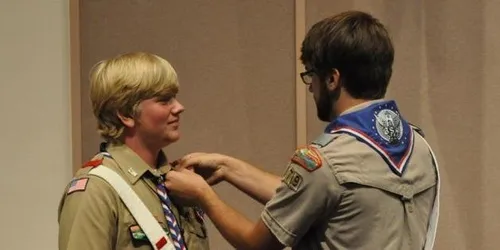
From Exclusion to Empowerment: The Triumphant Return of a Gay Scoutmaster
In a world constantly striving for greater inclusivity, some stories shine as beacons of hope and progress, illuminating the path forward. One such narrative, both poignant and powerful, recently emerged, reminding us of how far we’ve come and the enduring spirit of resilience within the LGBTQ+ community. This is the story of Tim Curran, a former boy scout who, 45 years after being unjustly expelled for being gay, has returned to the very organization that once rejected him, now serving as a proud and visible Gay Scoutmaster. His journey, chronicled by People, isn’t just a personal triumph; it’s a testament to societal evolution, the unwavering human desire for belonging, and the profound impact of seeing oneself reflected in leadership.
Tim’s words resonate deeply: “When I was a kid, Scouting felt like getting ready for a mission or an expedition.” For countless young people, scouting organizations offer a vital framework for growth, adventure, and community. It’s a place where character is forged, skills are learned, and lifelong friendships are made. Yet, for decades, this foundational experience was denied to many within the LGBTQ+ community, creating deep wounds and a sense of exclusion that lingered for years. Tim Curran’s return doesn’t just mark a personal full circle; it symbolizes a momentous shift within one of America’s most iconic youth organizations, mirroring a broader cultural movement towards acceptance and equality.
The Echoes of Exclusion: A Look Back at BSA’s Past
To truly appreciate the significance of Tim Curran’s story, we must first understand the historical landscape of the Boy Scouts of America (BSA) regarding LGBTQ+ individuals. For much of its history, the BSA maintained a strict policy of excluding gay members and leaders, a stance that caused immense pain and controversy. The official ban on gay leaders dates back to 1978, later affirmed in 1991, and famously upheld by the U.S. Supreme Court in 2000 in the landmark case Boy Scouts of America v. Dale. This ruling granted the BSA the right to set its own membership standards, effectively legalizing discrimination based on sexual orientation within the organization.
For young people like Tim, who felt a strong connection to scouting and its values, these policies were devastating. They were forced into a painful choice: deny their true identity or be expelled from a community they cherished. The psychological toll of such exclusion was immense, fostering environments where secrecy and fear overshadowed the camaraderie and openness scouting was supposed to cultivate. Many bright, talented, and dedicated young men found their dreams of leadership and service crushed, their contributions deemed unworthy simply because of who they loved. This era left an indelible mark on an entire generation of LGBTQ+ individuals, instilling a sense of being ‘othered’ by institutions meant to nurture them.
A Journey of Resilience: Tim Curran’s Story Unfolds
Tim Curran’s experience is a powerful microcosm of this larger struggle. At the tender age of 18, on the cusp of adulthood and deeply invested in his scouting journey, he was summarily removed from the organization he loved. The details of his expulsion might be unique to him, but the feeling of rejection and the sting of being told he didn’t belong because of his identity are universally understood by many in the LGBTQ+ community who faced similar discrimination in various facets of their lives. It was a moment that could have easily led to resentment or a complete disavowal of scouting’s ideals.
Yet, Tim’s love for the mission of scouting, for its values of service, leadership, and community, endured. Forty-five years is a lifetime. In that time, societal attitudes have shifted dramatically, and the fight for LGBTQ+ rights has seen monumental victories. While the news summary doesn’t delve into Tim’s life during those intervening decades, it’s safe to assume he, like many others, built a life, found community, and likely witnessed the slow, arduous march towards equality from afar. His decision to return now as a Gay Scoutmaster speaks volumes – not just about his personal courage, but about his belief in the possibility of redemption and the power of a changed organization to do good.
The Turning Tide: BSA’s Evolution Towards Inclusion
The BSA’s journey towards inclusivity has been neither swift nor easy, but it has been transformative. It was driven by sustained advocacy from within and outside the organization, growing public pressure, and a changing social conscience. Key milestones mark this progression:
- 2013: The BSA voted to end its ban on openly gay youth members. This was a crucial first step, acknowledging that young people should not be excluded based on their sexual orientation.
- 2015: Building on the 2013 decision, the BSA’s executive board voted to lift the ban on openly gay adult leaders and employees. This monumental change directly paved the way for individuals like Tim Curran to return and serve in leadership roles, marking the true ‘full circle’ moment for many.
- 2017: The BSA announced it would begin accepting transgender boys into its programs, further expanding its definition of inclusivity and reflecting a deeper understanding of gender identity.
These policy changes didn’t happen in a vacuum. They were the result of tireless efforts by organizations like Scouts for Equality, countless individual advocates, and the brave testimonies of former scouts and leaders who shared their stories of pain and exclusion. The BSA, facing declining membership and increasing public scrutiny, eventually recognized that its exclusionary policies were unsustainable, morally indefensible, and out of step with the values it purported to uphold.
More Than a Title: The Power of a Gay Scoutmaster
The return of Tim Curran as a Gay Scoutmaster is more than a symbolic gesture; it has tangible, far-reaching implications. For LGBTQ+ youth currently in scouting or considering joining, seeing an openly gay leader provides invaluable visibility and representation. It sends a clear, unequivocal message: ‘You belong here. You are valued. You can be a leader.’ This can be profoundly affirming for young people who may still face discrimination or feel marginalized in other areas of their lives. Representation fosters a sense of psychological safety and empowers youth to be their authentic selves.
For older generations of LGBTQ+ individuals, Tim’s story offers a measure of healing and validation. It’s a recognition that their past pain was unwarranted and that their contributions, once rejected, are now welcomed. For the BSA itself, it’s an opportunity to actively participate in restorative justice, demonstrating that the organization is not just changing policies but also striving to heal past wounds and build a truly inclusive culture. Furthermore, having diverse leaders enriches the scouting experience for all participants. It introduces different perspectives, promotes empathy, and helps to cultivate a more accepting and understanding generation of leaders and citizens.
A diverse leadership also challenges lingering stereotypes about what it means to be a leader or a scout. It broadens the perception of masculinity and leadership, affirming that character, integrity, and dedication are not confined by sexual orientation or gender identity. By embracing diversity at its highest levels, scouting organizations can better prepare young people for a complex, diverse, and interconnected world.
Connecting Across Generations and Digital Spaces
Tim Curran’s story bridges decades, connecting the struggles of the past with the hopes of the present. This intergenerational dialogue is vital, allowing younger generations to learn from the experiences of their elders, and older generations to witness the fruits of their persistent activism. In an increasingly digital world, these connections are often facilitated and amplified through online communities.
For many years, when traditional institutions like the BSA were unwelcoming, LGBTQ+ individuals found solace, support, and a sense of belonging in online chat groups, forums, and social media platforms. These digital spaces became crucial for sharing experiences, advocating for change, and building ‘chosen families’ when biological families or local communities were unaccepting. Former scouts who were expelled or felt marginalized could connect with others who understood their pain, collectively strategizing and organizing movements like Scouts for Equality.
The internet has transformed how marginalized communities coalesce and mobilize. While the news of a Gay Scoutmaster returning might be celebrated in mainstream media, its true resonance is often amplified and deeply felt within dedicated online LGBTQ+ communities. Here, discussions flourish about what such a return means for healing, for continued advocacy, and for the future of inclusive youth development. These platforms allow individuals to engage with the narrative, share their own stories, and find affirmation in collective progress, even for those who are not directly involved in scouting today but carry the weight of past exclusion.
The Road Ahead: Sustaining True Inclusivity
While Tim Curran’s story is undoubtedly a cause for celebration, it also serves as a potent reminder that the journey towards true inclusivity is ongoing. Policy changes are monumental, but cultural transformation runs deeper. For the BSA, and indeed for any organization striving for genuine diversity and inclusion, the work doesn’t stop with updated handbooks.
Sustaining inclusivity requires:
- Ongoing Education and Training: Ensuring that all leaders, volunteers, and members understand and embrace the values of diversity, equity, and inclusion, actively challenging unconscious biases.
- Creating Safe Spaces: Actively fostering environments where LGBTQ+ youth and leaders feel genuinely safe, respected, and celebrated, free from microaggressions or overt discrimination.
- Visible Leadership: Continuing to support and promote LGBTQ+ individuals in leadership roles across all levels of the organization, making sure their voices are heard and valued.
- Intersectionality: Recognizing that the LGBTQ+ community is diverse, encompassing individuals of different races, ethnicities, abilities, and socioeconomic backgrounds, and ensuring that inclusion efforts are intersectional.
- Accountability: Having clear mechanisms for reporting and addressing instances of discrimination, demonstrating a commitment to upholding inclusive policies.
The return of a Gay Scoutmaster like Tim Curran is not merely the end of a long struggle for one man, but a powerful milestone in a much larger, ongoing mission. It is a symbol that an organization can evolve, can right past wrongs, and can ultimately fulfill its promise to serve all youth, irrespective of their identity.
A Beacon of Hope and Progress
Tim Curran’s journey from expelled scout to celebrated Gay Scoutmaster is a profoundly moving narrative of resilience, hope, and the transformative power of inclusion. His story is a vibrant thread in the rich tapestry of LGBTQ+ history, illustrating how personal struggles can become catalysts for broader social change. It reminds us that progress, though often slow and hard-won, is indeed possible. It challenges us to look beyond past prejudices and to envision a future where every young person, regardless of who they are or who they love, has the opportunity to thrive, belong, and lead in every community they choose to join. Tim Curran is not just back; he is leading, he is inspiring, and he is helping to build a more welcoming world for generations to come. His mission, once interrupted, is now fully underway, guiding new expeditions towards a future built on acceptance and equality.