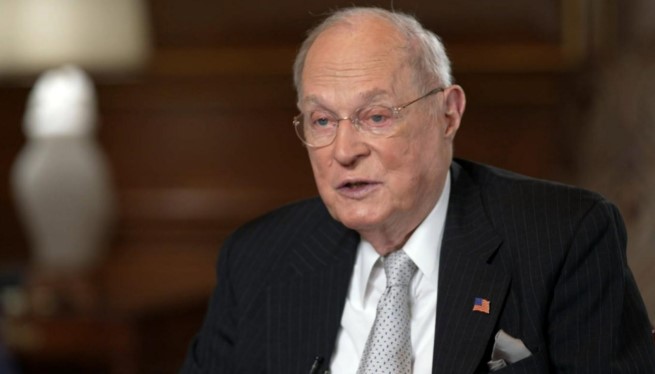
In the landscape of American jurisprudence, few names carry as much weight for the LGBTQ+ community as Justice Anthony Kennedy. As the author of the landmark 2015 Obergefell v. Hodges decision, Kennedy essentially rewrote the social contract of the United States, granting millions the right to marry. However, in a rare and somber public appearance on February 24, 2026, the retired Justice delivered what many are calling a “constitutional distress signal.” The Justice Anthony Kennedy marriage equality warning 2026 centers on a growing movement within state legislatures to undermine federal precedents, suggesting that the “dignity” he once codified is being systematically dismantled.
The Erosion of Precedent: Why Kennedy is Worried
During his remarks, Kennedy pointed to the aggressive legal strategies currently being deployed in over 20 states. These efforts aren’t always direct challenges to marriage itself but are often “proxy battles” over parental rights, tax benefits, and religious exemptions. By chipping away at the secondary benefits of marriage, these states are effectively creating a tiered citizenship. Kennedy’s concern is that if the Supreme Court continues its current trajectory of “originalist” interpretation, the very foundation of Obergefell—the Due Process and Equal Protection clauses—could be reinterpreted to exclude same-sex unions once again.
A Global Contrast: From Washington to Amsterdam
Kennedy’s warning comes at a time of profound global irony. Just yesterday, the world watched as Rob Jetten took his oath as the first gay Prime Minister of the Netherlands. While the Netherlands exemplifies a future where queer leadership is normalized and protected, the United States is grappling with a potential regression. This contrast highlights a dangerous divergence: while Western Europe solidifies the “Jetten era” of total integration, the U.S. legal system faces a “Kennedy crisis” where long-settled rights are being pulled back into the courtroom.
The “Patchwork” Reality of LGBTQ Identity Laws 2026
The practical result of these legal threats is already visible in our LGBTQ identity laws 2026 guide. We are seeing a return to the pre-2015 “patchwork” system, where a marriage recognized in New York may face administrative hurdles in Kansas or Florida. Kennedy argued that this legal instability is exactly what the Constitution was designed to prevent. For queer families, this isn’t just a theoretical debate; it’s a matter of whether their healthcare coverage, inheritance rights, and parental standing will survive a drive across state lines.
Community Resilience and the Need for Safe Haven
When the highest legal authorities express fear, the psychological impact on the community is immediate. At gay-chat.org, we’ve seen a significant increase in users seeking clarity on their rights and security. Digital communities like Menchats have transformed from social hubs into essential information networks where individuals share legal advice and support. In an era where the courtroom feels hostile, these safe spaces provide the “dignity” that Kennedy spoke of—not through laws, but through collective solidarity.
The Role of AI in Navigating Legislative Stress
As the legal battle intensifies, the mental health burden on the LGBTQ+ community has reached a critical point. The uncertainty of one’s legal status is a form of chronic stress that can lead to severe anxiety. This is why tools like LGBTQ AI mental health support 2026 are becoming indispensable. By providing instant, trauma-informed guidance to those affected by these legislative shifts, AI technology is filling a gap that traditional legal and mental health systems are struggling to address.
Conclusion: The Battle for the Future of Dignity
The Justice Anthony Kennedy marriage equality warning 2026 is more than just a legal opinion; it is a call to action. It reminds us that rights are not self-executing; they must be defended by every generation. Whether through the ballot box, the courtroom, or the community support found on platforms like gay-chat.org, the struggle for equal dignity remains the defining challenge of our era. As Kennedy himself once wrote, “The Constitution promises liberty to all within its reach.” In 2026, the community is determined to ensure that reach remains universal.
⚖️ Explore More on Gay-Chat.org:
- Rob Jetten 2026 Analysis: A beacon of hope in European politics.
- LGBTQ Identity Laws Guide: Your state-by-state rights in 2026.
- Menchats Community: Connect and share in safe, queer-focused spaces.
- LGBTQ AI Mental Health: Coping with legal and social stress in the 2020s.