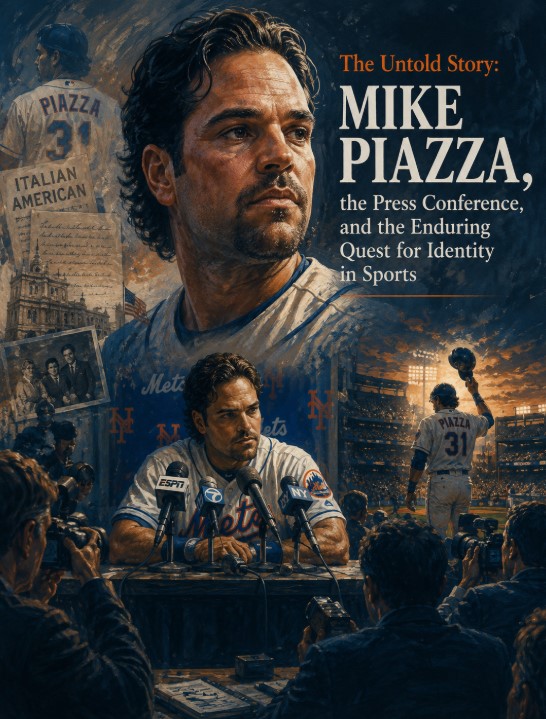
The Untold Story: Mike Piazza, the Press Conference, and the Enduring Quest for Identity in Sports
In the annals of sports history, few moments are as uniquely perplexing and profoundly telling as Mike Piazza’s press conference from the early 2000s. The acclaimed MLB catcher, a formidable presence on the field, felt compelled to address swirling rumors about his sexuality, ultimately declaring to the world that he was, in fact, straight. While seemingly a straightforward personal statement, this extraordinary event casts a long shadow, revealing deep-seated anxieties, societal pressures, and the complex journey of identity in sports, particularly within a culture often resistant to difference. For the LGBTQ+ community and those navigating their authentic selves in public and private spaces, Piazza’s story isn’t just a historical footnote; it’s a poignant reminder of the battles fought and the progress still needed for true acceptance.
As a community deeply invested in authenticity and the freedom to express one’s true self, the narrative around Piazza’s declaration resonates with a particular weight. It highlights an era—not so long ago—where even the insinuation of being gay was perceived as a career threat, a public relations crisis, or something to be vehemently denied. It forces us to examine the very structures of public life, sports culture, and media scrutiny that can compel someone to perform their identity in such a public and defensive manner.
The Echoes of an Era: Sports, Silence, and Speculation
To fully grasp the significance of Piazza’s press conference, we must transport ourselves back to the turn of the millennium. The landscape for LGBTQ+ individuals, particularly in hyper-masculine environments like professional sports, was starkly different from today. There were virtually no openly gay male athletes in major American sports leagues, and the dominant narrative was one of silence, whispered rumors, and pervasive stereotypes. The idea of an athlete being openly gay was often met with discomfort, fear of locker room disruption, and concern for endorsement deals.
- Locker Room Culture: Historically, professional sports locker rooms have been spaces where traditional masculinity is reinforced, often with homophobic undertones. Deviation from this norm was (and sometimes still is) met with suspicion or hostility.
- Media Scrutiny: Athletes, especially high-profile ones like Piazza, live under an intense microscope. Personal lives often become public fodder, and any perceived deviation from the norm can fuel relentless speculation.
- The ‘Don’t Ask, Don’t Tell’ Paradigm: While officially a military policy, this unofficial ethos permeated many public spheres, including sports. The unspoken rule was that if you were gay, you simply didn’t talk about it, and if you were straight, you certainly didn’t let anyone think otherwise.
Piazza, an iconic figure with a powerful swing and a larger-than-life persona, found himself at the center of this maelstrom. The rumors about his sexuality, fueled by various whispers and media interpretations, grew to a point where he felt his only recourse was a public denial. This wasn’t just a casual statement; it was a choreographed event, signaling the extreme pressure he felt to control a narrative that could, in his eyes, derail his career and public image.
The Weight of a Denial: What It Signaled to the LGBTQ+ Community
While Piazza’s statement was about his own truth, its reverberations were felt deeply within the LGBTQ+ community. For many, it underscored the prevalent idea that being gay was something to be feared, hidden, or vehemently disavowed. The implication, whether intended or not, was clear: being gay was a liability, something so undesirable that a celebrity felt compelled to call a press conference to distance himself from the speculation. This act inadvertently reinforced the shame and stigma associated with same-sex attraction at a time when queer individuals were already fighting tooth and nail for basic acceptance.
The incident also highlighted the immense burden placed on queer athletes who were living in silence. If a straight player felt such pressure to declare his heterosexuality, imagine the psychological toll on those who actually *were* gay but felt they couldn’t possibly come out. It painted a vivid picture of the hostile environment that effectively forced countless athletes into the closet, robbing them and the world of their authentic selves.
From Isolation to Connection: The Role of Online Spaces
In the era of Piazza’s declaration, the avenues for LGBTQ+ individuals, especially those in isolated communities or high-pressure professions, to connect and find support were limited. Fast forward to today, and the landscape has been revolutionized by digital platforms. Online chat and dating communities have become vital havens for self-discovery, connection, and affirmation, offering a stark contrast to the public scrutiny faced by figures like Piazza.
These spaces provide an environment where individuals can explore their identity without the immediate glare of public judgment. For those who might have felt isolated and alone in the past, a secure online chat can offer a lifeline, a place to build community, share experiences, and find understanding. The ability to connect anonymously at first, and then build trust, offers a fundamental layer of safety and agency that was largely unavailable in the past. To learn more about navigating these valuable resources, we recommend checking out our Secure Gay Chat Guide 2026: The Ultimate Manual, which provides essential tips for privacy and positive interaction in digital spaces.
Progress and Pushing Boundaries: A Changing Field
Thankfully, the narrative around LGBTQ+ individuals in sports has begun to shift, albeit slowly. We’ve seen an increasing number of athletes, across various sports, bravely coming out and being met with growing support from fans, teammates, and even league officials. Players like Carl Nassib in the NFL, Robbie Rogers in MLS, and many others have paved the way, demonstrating that authenticity can coexist, and even thrive, in professional sports.
Major League Baseball itself has made strides, with Pride Nights becoming more common, and a broader embrace of inclusion. While challenges remain, the conversation has moved from absolute silence and denial to one of growing visibility and advocacy. This change isn’t just happening in sports; it’s a reflection of broader societal progress, where queer stories are finding mainstream success and celebration. For example, the success of young actors portraying queer characters, and the powerful impact they have on audiences, signals a profound shift. We’ve seen talents like Joe Locke, whose Emmy win for Heartstopper marked a historic moment, bringing queer youth experiences to a global stage with unprecedented acclaim. These moments of triumph highlight how far we’ve come from the era where identity had to be denied.
The journey from Piazza’s press conference to today’s landscape of openly queer athletes and celebrated queer narratives in media is a testament to the persistent efforts of activists, allies, and trailblazers. It’s a reminder that culture is not static; it evolves with courage and persistent dialogue.
Beyond the Headlines: The Personal Cost of Conformity
While we can analyze the societal implications, it’s also crucial to remember the personal toll that such intense public scrutiny and pressure must have taken on Mike Piazza. No individual should ever feel compelled to declare their sexuality, straight or otherwise, to satisfy public curiosity or quell unfounded rumors. His experience serves as a stark reminder of the immense pressure public figures face to conform to societal expectations, often at the expense of their personal peace and autonomy.
This episode is a powerful lesson in empathy. It reminds us that even those who appear to hold all the cards—fame, success, adulation—can be vulnerable to the crushing weight of public perception. It’s a call to examine the systems that create such environments and to work towards dismantling them.
Forging a Future of Authenticity and Acceptance
Mike Piazza’s press conference, while an artifact of a different time, remains profoundly relevant. It prompts us to reflect on:
- The Evolving Definition of Masculinity: How can we challenge rigid notions of masculinity in sports and beyond to create space for all identities?
- Media Responsibility: What role does responsible journalism play in respecting privacy and challenging harmful speculation?
- Allyship and Advocacy: How can allies actively work to create environments where no one feels compelled to deny who they are?
- The Power of Openness: How does increased visibility of LGBTQ+ athletes and personalities contribute to a more accepting society?
The enduring quest for identity in sports, and indeed in all walks of life, is fundamentally about freedom—the freedom to be oneself, to love whom one chooses, and to live authentically without fear of reprisal or the need for public defense. As we move forward, fueled by the bravery of those who continue to break barriers, we must commit to building a world where every individual can stand confidently in their truth, on and off the field, without needing a press conference to explain themselves.
The journey from the silence of Piazza’s era to the burgeoning chorus of queer voices today is far from over, but the direction is clear: towards a future where acceptance is universal, and authenticity is celebrated as the ultimate win.